
Hand hygiene is recognized as one of the most important practices for preventing infections in healthcare organizations. However, maintaining consistent hand hygiene compliance can be challenging due to busy and demanding clinical environments. Traditional paper-based audit methods often require significant time and manual effort, making it difficult to efficiently collect, manage, review, and share audit data. As healthcare organizations expand and become increasingly busy, the need for more effective digital approaches is growing. Healthcare teams are looking for better ways to simplify hand hygiene auditing and support continuous infection prevention and quality improvement.
Here, we explain the role of digital hand hygiene audit systems in modern healthcare; the limitations of traditional auditing methods; key factors to consider when selecting an audit solution; and how healthcare organizations are using digital tools to strengthen compliance, improve patient safety, and build more effective infection prevention programs.
Why hand hygiene matters in healthcare organizations
Modern healthcare continues to make progress through innovation, research, and advanced medical practices. However, the importance of hand hygiene remains a fundamental part of infection prevention, a principle that has been recognized since the time of Ignaz Semmelweis and Florence Nightingale. Despite continuous improvements in healthcare, healthcare-associated infections (HAIs) remain a significant challenge, affecting patient safety, treatment outcomes, and healthcare resources.
Even with today’s advanced medical technologies, hand hygiene remains one of the most effective practices for reducing infection transmission in healthcare environments. Every interaction between healthcare workers, patients, medical equipment, and the environment creates opportunities for microorganisms to spread when proper hand hygiene practices are not followed.
Effective hand hygiene practices are not simply routine tasks. They are an essential component of safe healthcare delivery. Maintaining consistent hand hygiene compliance is not always easy in busy clinical environments. It requires continuous awareness, staff education, regular observation and feedback, and ongoing improvement efforts. By strengthening hand hygiene practices, healthcare organizations can support infection prevention programs, improve patient safety, and promote continuous quality improvement.
Why are paper-based audits no longer enough in 2026?
For decades, paper-based audits have been widely used by healthcare organizations to record hand hygiene observations. While they provide a straightforward way to document observations, the management of paper records can create administrative challenges. Manual data entry (prone to transcription errors), reporting, storage, and analysis can make it harder for healthcare teams to identify trends and respond quickly to compliance gaps.
In 2026, healthcare teams need a more efficient way to collect, manage, and analyze hand hygiene audit data without changing the direct observation process itself.
Why healthcare organizations are adopting digital hand hygiene audit systems
Traditional paper-based methods can be time-consuming, difficult to manage, and less effective for tracking compliance across departments or multiple facilities.
By digitizing the audit process, organizations can collect audit data more consistently, maintain centralized records, and gain better visibility into hand hygiene performance over time. As healthcare continues to embrace digital transformation into and beyond 2026, digital hand hygiene audits have become a practical option for improving audit management and supporting long-term quality improvement.
However, choosing a digital audit system requires more than simply replacing paper with software. Healthcare teams should consider how well a solution fits their existing audit workflow, whether it supports direct observation, how easily data can be collected in clinical environments, and whether the reporting and analytics provide useful information for quality improvement.
Benefits of hand hygiene audits for healthcare teams and patient safety

Regular audits encourage accountability, reinforce best practices, and help healthcare organizations maintain high standards of care through continuous monitoring and improvement. A well-managed digital hand hygiene audit system can identify the improvement opportunities, monitor progress, and respond more effectively to areas that need attention. This can help healthcare teams work more efficiently while supporting better patient care. For patients, consistent hand hygiene practices contribute to a safer healthcare environment.
Key benefits for healthcare organizations and teams:
- Improves hand hygiene compliance
- Reduces paper-based audits and paperwork
- Reduces manual reporting
- Improves workflow efficiency
- Supports compliance tracking
- Provides reporting and dashboards
- Supports Infection Prevention & Control
- Supports quality improvement
How hand hygiene audit improves infection prevention and patient safety
Every year, millions of patients worldwide are affected by healthcare-associated infections (HAIs) which can prolong hospital stays and threaten the lives of vulnerable individuals. Effective hand hygiene is one of the most important defenses against healthcare-associated infections (HAIs).
By measuring compliance through direct observation, healthcare teams can better understand where improvements are needed and take corrective action. This supports infection prevention and control programs, strengthens patient safety initiatives, and helps create a safer environment for both patients and healthcare workers.
Over time, regular audits help healthcare organizations build a stronger culture of accountability, encourage continuous staff education, and maintain consistent hand hygiene practices across the organization.
Why direct observation remains important for hand hygiene audit
According to the World Health Organization (WHO), healthcare-associated infections continue to be a major patient safety concern, highlighting the importance of effective hand hygiene practices. However, maintaining consistent hand hygiene compliance remains challenging in busy healthcare environments, making regular observation and improvement efforts essential.
WHO recognizes direct observation as the gold standard for measuring hand hygiene compliance. Observation-based auditing allows trained auditors to evaluate hand hygiene practices during routine patient care and identify opportunities for improvement based on real-world clinical behavior.
WHO Five Moments for Hand Hygiene helps healthcare organizations assess whether hand hygiene is performed at the appropriate moments
- Before touching a patient
- Before clean or aseptic procedures
- After body fluid exposure risk
- After touching a patient
- After touching patient surroundings
Digital audit systems can support this observation-based approach by making it easier to record observations of all moments, measure compliance, identify improvement opportunities, and manage audit data.
How to choose the right digital hand hygiene audit system for your healthcare organization?
If your healthcare organization still relies on paper-based audits or manual reporting, it may be time to consider a more efficient digital approach.
When evaluating different solutions, healthcare organizations should consider several factors:
- Does the system support direct observation of all moments rather than replacing it with automated monitoring of a few moments?
- Can auditors collect data using mobile devices?
- Does it work when internet connectivity is limited?
- Can compliance be tracked across departments and facilities?
- Does it provide useful dashboards and reports?
- Does it support the WHO Five Moments or Canada’s Your 4 Moments?
- Can the system scale across multiple hospitals or healthcare facilities?
- Does it help connect audit findings with quality improvement?
These factors can help healthcare teams compare different solutions based on their actual operational needs rather than simply choosing a system based on the number of features.
What is a CleanHands® Audit? How CleanHands® Stands Out in the Digital Hand Hygiene Landscape
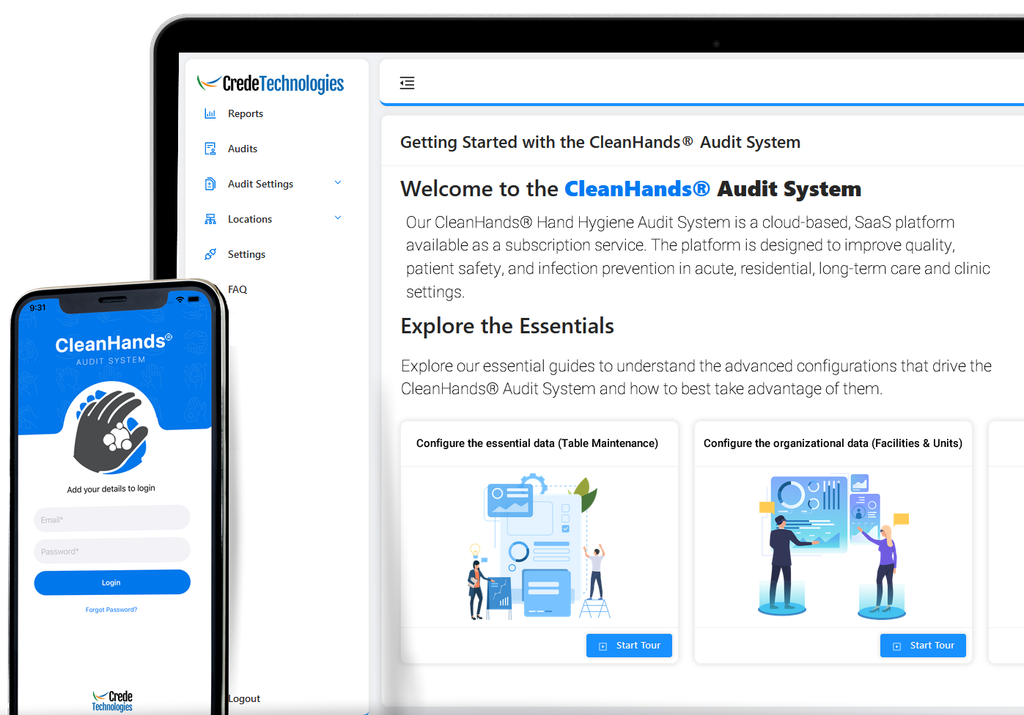
Healthcare organizations have several digital solutions to choose from for hand hygiene auditing. Depending on their specific goals and requirements, these solutions vary significantly in their approach. Clean Hands Audit is a top-tier choice, specifically engineered around direct observation-based hand hygiene auditing.
CleanHands® is an inexpensive but exceptional platform that outperforms traditional systems on the market by streamlining data collection, tracking compliance effortlessly, generating comprehensive reports, and identifying actionable opportunities for quality improvement.
CleanHands® offers a practical and superior solution for organizations looking to digitize their established direct observation workflows rather than implement automated technology. It helps healthcare providers seamlessly transition away from manual, paper-based audits.
How CleanHands® can help healthcare organizations
CleanHands® is designed to support healthcare teams throughout the hand hygiene auditing process, from collecting observations to reviewing compliance data and identifying areas for improvement.
Key capabilities include:
- Direct observation-based auditing: Record hand hygiene observations by healthcare employees and evaluate compliance based on real-world clinical practices.
- Mobile and web-based data collection: Conduct audits using mobile devices and manage audit information through a secure web-based portal.
- Offline audit capability: Collect audit data without an internet connection and synchronize information when a connection becomes available.
- Reporting and dashboard analytics: Access compliance reports, trends, and performance insights to support quality improvement initiatives.
- Multi-hospital and department support: Manage audits across hospitals, departments, wards, and healthcare facilities through a centralized system.
- WHO Five Moments support: Structure observations around internationally recognized hand hygiene guidelines.
Final thoughts:
Hand hygiene remains vital for infection prevention and patient safety. As traditional paper-based audits become less practical, digital systems provide an efficient way to record observations, track compliance, and manage audit data.
For healthcare organizations looking to maintain direct observation of all moments rather than relying on automated monitoring or some moments, solutions like CleanHands® offer a focused approach that combines mobile data collection, offline auditing, and centralized reporting to support continuous quality improvement.
Frequently asked questions (FAQs)
1. Can auditors add other healthcare workers during a hand hygiene audit?
Yes. A digital hand hygiene audit system can allow authorized users to add healthcare workers, such as doctors, nurses, and other clinical staff, during the audit process.
2. Can a digital hand hygiene audit system support multiple healthcare facilities?
Yes. A scalable digital hand hygiene audit system can support healthcare organizations managing multiple hospitals, campuses, departments, wards, clinics, and healthcare facilities. It can help organizations standardize audit processes and analyze compliance performance across different operational levels.
3. Is a digital hand hygiene audit system a good fit for hospitals in Canada and the USA?
Hospitals and healthcare organizations in Canada and the USA can benefit from digital hand hygiene audit systems that help improve audit efficiency, support infection prevention programs, and maintain accurate compliance records. The right solution will depend on the organization’s audit process, operational requirements, and compliance goals.
4. Can a digital hand hygiene audit system work with limited internet connectivity?
Yes. Some digital hand hygiene audit systems support offline data collection, allowing auditors to collect audit data without internet access. Once a connection becomes available, the data can synchronize with the central system.